




Retail Cash Management: A Guide to Reducing Shrinkage
Cash shrinkage costs retailers billions each year. When registers aren't properly managed, discrepancies compound quickly across multiple shifts and employees. Implementing a structured cash management system protects your bottom line while establishing accountability across your team.
Why Retail Cash Management Matters
Cash handling errors in retail create significant financial leakage that most business owners overlook. According to the NRF, internal and external theft together account for nearly two-thirds of total retail shrinkage - but process and control errors add significantly to the total, meaning the losses within a retailer's own walls far outpace external theft alone. Without proper controls, a single register handling $5,000 daily could lose $50-$200 to undetected discrepancies each week.
Beyond direct financial loss, poor cash management creates employee frustration and damages trust within your organization. When discrepancies go unresolved, staff members question the fairness of accountability systems and may become less diligent about their own cash handling. Transparent procedures and consistent reconciliation, on the other hand, build a culture where accuracy matters.
Building Your Retail Cash Handling Policy
A written cash-handling policy creates accountability and clarity for every employee dealing with currency. Your policy should document procedures for opening registers, handling customer transactions, managing refunds, and closing out daily operations. Include specific language about what constitutes acceptable cash handling and the consequences for policy violations.
Document your starting float amount - the initial cash placed in each register at opening. Most retail operations use floats between $300 and $ 500, though this varies with transaction volume. Your policy should specify who approves float requests and how float discrepancies are handled. When floats are inconsistent, it becomes impossible to isolate where errors originated.
Establish maximum cash levels for each register. Excessive cash sitting in a drawer increases both loss risk and the impact of any undetected theft. Most retailers set limits between $2,000 and $ 5,000 per register, requiring excess cash to be transferred to a safe during the day. Create a log that documents each cash drop with the time, amount, and employee name.
POS and Register Management
Your point-of-sale system is the foundation of accurate cash tracking. Train employees to ring every transaction - there's no "it's just a small sale" exception. Skipped transactions create register overages that mask theft or discrepancies elsewhere. Require managers to review transaction logs weekly for unusual patterns, such as excessive voids, discounts, or no-sale register openings.
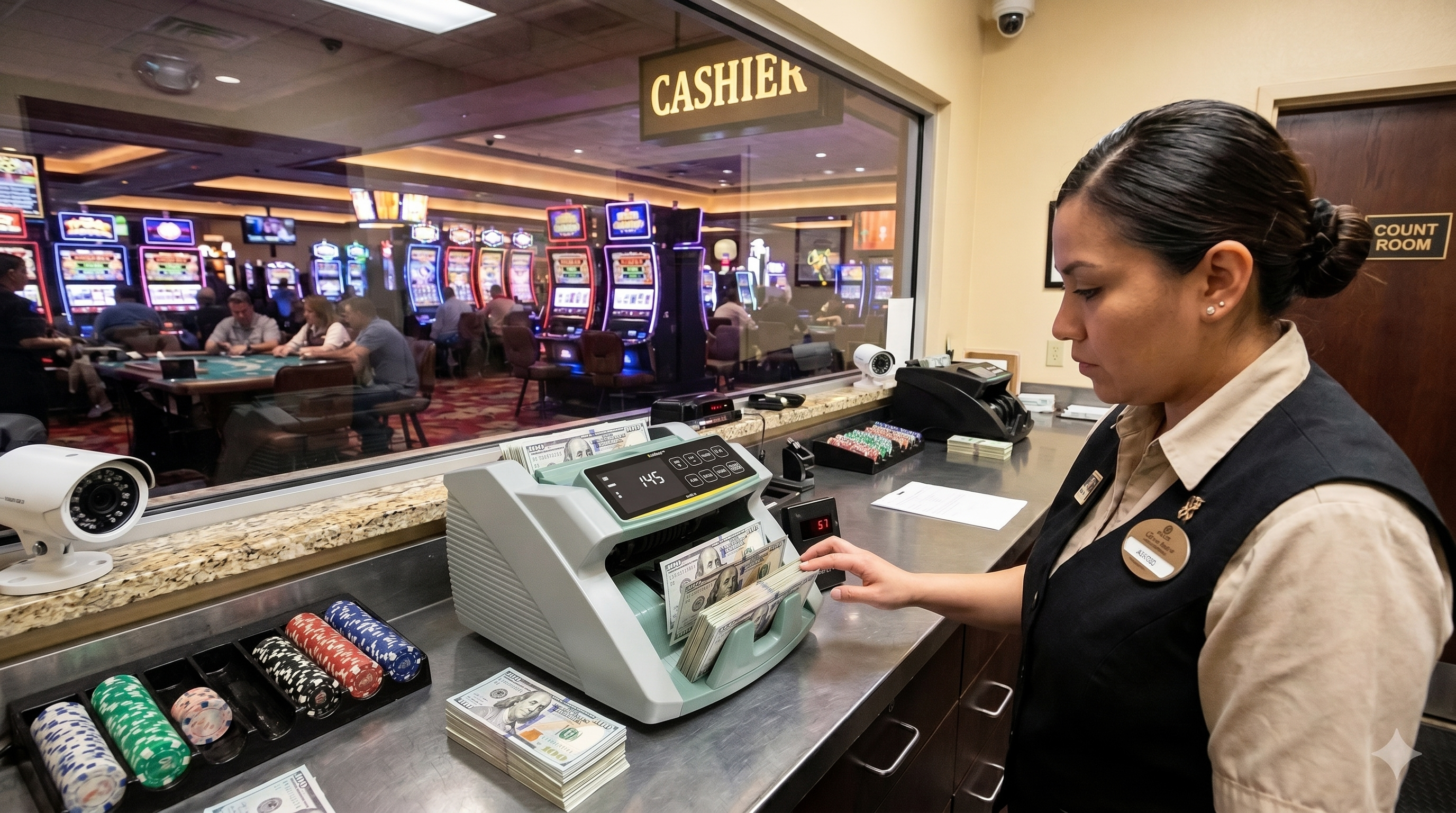
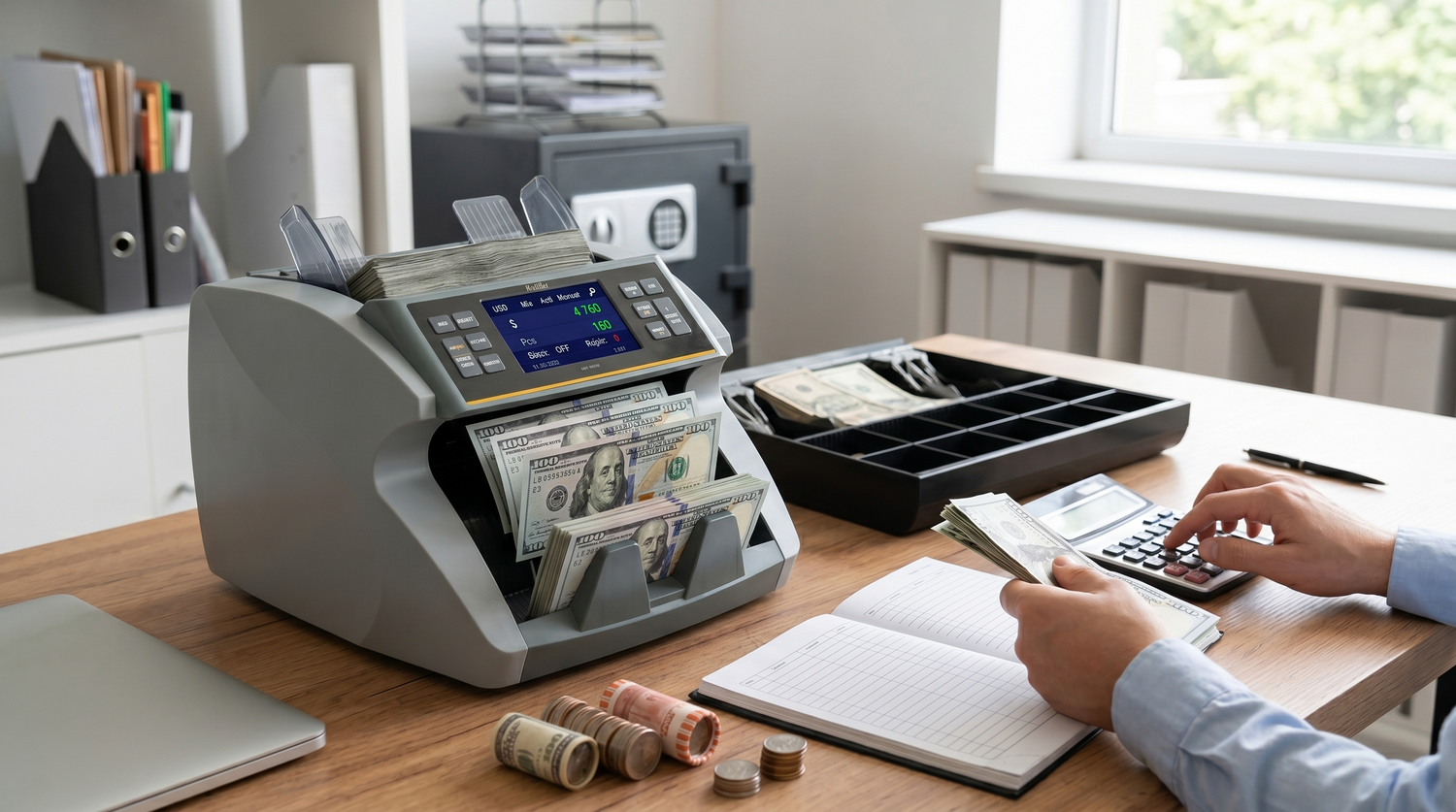
Implement a no-cash policy for certain transactions when possible. Gift cards, digital payments, and stored-value systems reduce cash-handling touchpoints and create automatic audit trails. If your business processes high transaction volumes, bill counters can significantly speed up reconciliation and reduce manual counting errors that lead to register shortages.
Set clear procedures for authorization codes. Refunds, price overrides, and discounts should require manager approval and generate specific transaction codes. Review these transactions during daily audits to spot patterns indicating collusion or policy violations.
Counterfeit Detection

Counterfeit bills cost retailers real money, but the detection needs to be practical. Cashiers can reasonably do a quick visual check on $50 and $100 bills - feel the paper, glance at the watermark. Anything beyond that slows down checkout and frustrates customers. Counterfeit detection pens only catch amateur fakes printed on standard copier paper and miss more sophisticated counterfeits like bleached bills, so they shouldn't be your main line of defense.
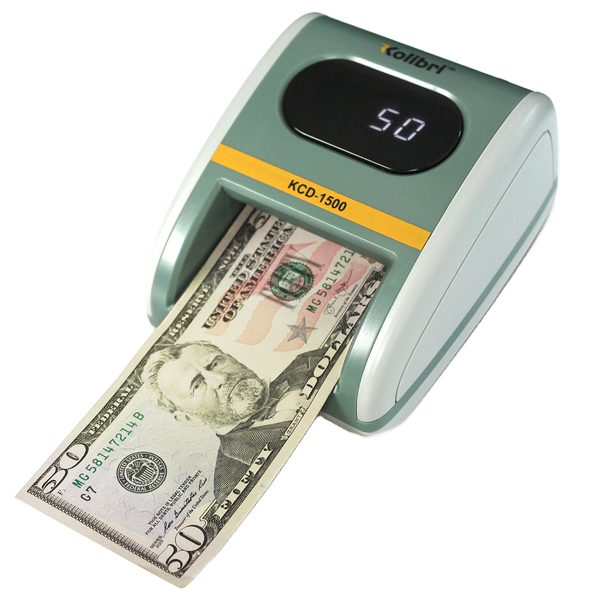
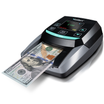
The real counterfeit screening happens during end-of-day counting. Place a KCD-1000 counterfeit detector at your reconciliation station - it combines UV, magnetic, infrared, and size verification in under two seconds, catching fakes before they reach your deposit. For stores processing high cash volume, the KCD-2000 adds 10 detection methods and displays denominations on screen, doubling as a reconciliation tool.
If a cashier does spot something obviously wrong during a transaction, they should accept the bill without confrontation, set it aside, and notify a manager after the customer leaves. Never allow employees to spend suspected counterfeits. Document the date, denomination, and register, then follow your bank's submission procedures.
End-of-Day Reconciliation Procedures

Daily cash reconciliation is non-negotiable for retail operations. Establish a consistent closing time when registers are locked, and no further transactions are accepted. Count drawer cash in the presence of the cashier whenever possible, documenting both the count and the employee's acknowledgment of accuracy.
Compare the physical cash count to the POS system's declared balance. Discrepancies of $1-5 are normal and can be written off as rounding, but anything larger requires investigation. Document the variance amount, likely cause, and any corrective action. Track variances monthly - if one employee consistently shows shortages, it suggests either carelessness or dishonesty.
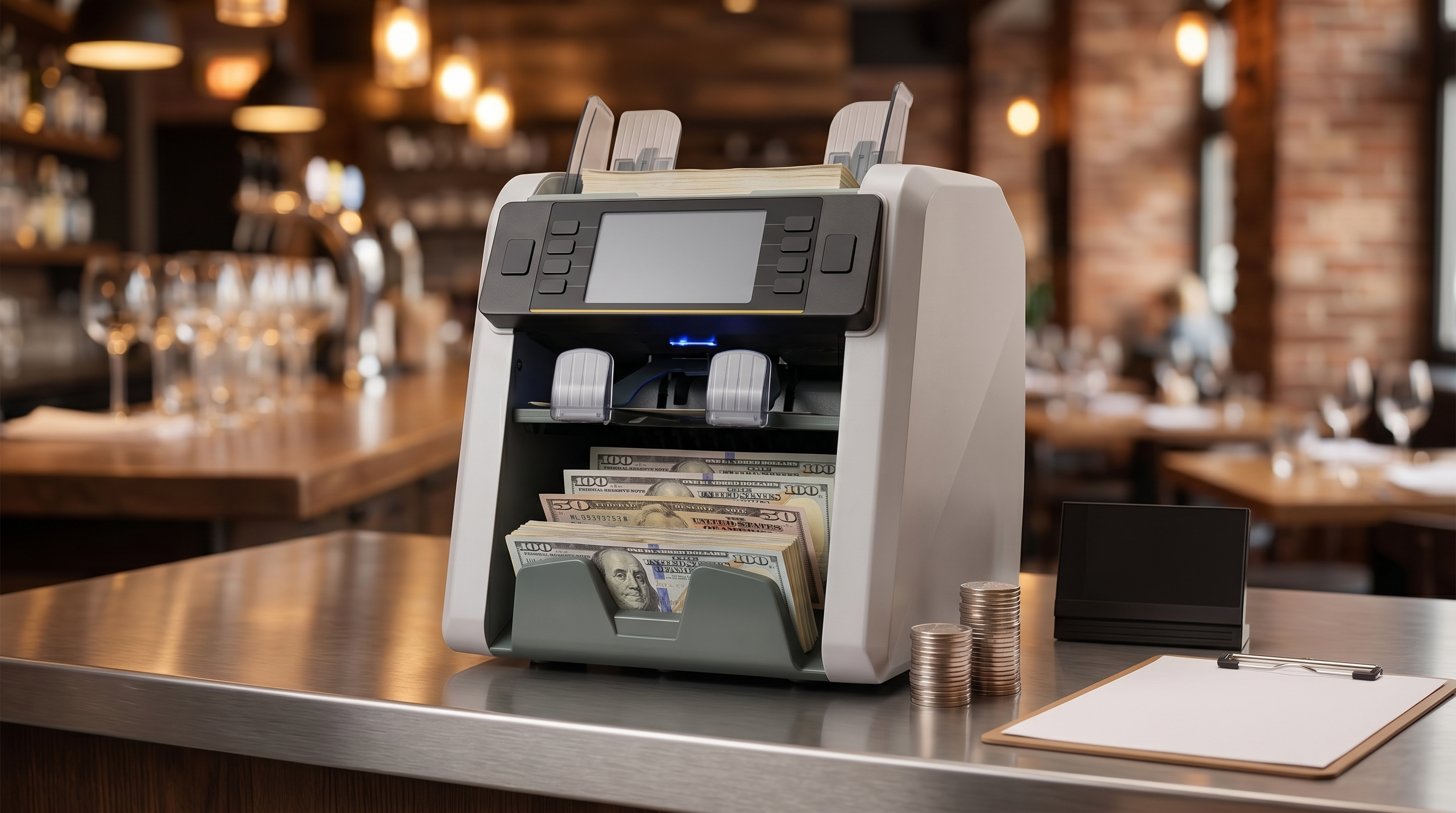
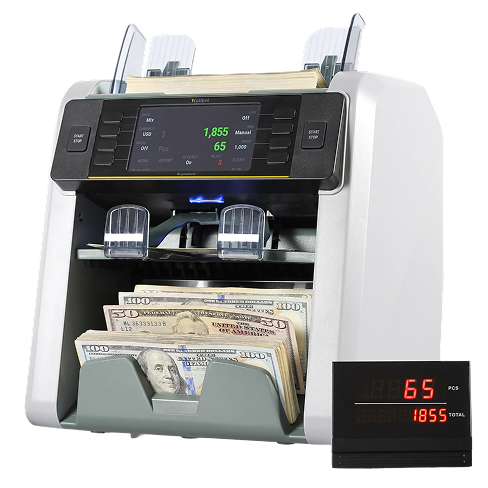
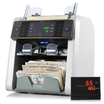
Use technology to accelerate reconciliation. Mixed bill counters like the KBR-500 automatically sort by denomination and display totals, eliminating manual counting errors that delay closings and frustrate staff. Faster reconciliation means faster audits and clearer accountability.
Separation of Duties
The fundamental principle of cash control is to ensure that no single employee controls the entire cash process. Separate responsibility for register operation, cash counting, bank deposits, and reconciliation review across different staff members. This prevents any single person from both stealing cash and covering it up through accounting records.
Implement manager sign-off on all daily reconciliations. The manager closing out registers should be different from the manager who opens them the next day, when possible. Rotate which employee operates each register regularly to prevent collusion between a consistent cashier and a regular manager.
Require two employees to witness high-value transactions when feasible. This is particularly important for refunds, high-dollar sales, or corrections to prior transactions. Document witness names and approval codes to create accountability trails.
Cash Transport and Deposit Procedures
Define clear procedures for transporting cash from registers to secure storage. Use deposit bags rather than loose cash, and require employees to sign for bags containing significant amounts of cash. Make deposits the same day when possible rather than holding cash overnight in registers.
Establish specific deposit days and amounts to create predictability while varying the exact timing to prevent pattern-based theft. Consider outsourcing deposits to an armored car service for larger operations - the fee is minimal compared to the security benefit and reduced employee exposure to robbery risk.
Document every deposit with the amount, date, time, and employee responsible. Reconcile deposits weekly to ensure all cash collected during the week reaches the bank. Cash that disappears between the closing of the drawer and the bank deposit suggests theft in transit or a failure to make deposits.
Audit Schedules and Variance Tracking
Conduct surprise audits on a rotating basis - at least quarterly for most retail operations. Audits should occur across different shifts and days of the week to catch issues that regular routines might hide. Document audit findings thoroughly and follow up with employees when discrepancies appear.
Create a variance-tracking dashboard that shows shortages and overages by employee, register, shift, and time period. Patterns in this data indicate problems. Persistent shortages from a single register might indicate a mechanical malfunction. Consistent overages from a particular employee might indicate they're taking payment but not ringing up the sale in the POS - pocketing the surplus later.
Report significant discrepancies to law enforcement if they suggest criminal activity. Consult with your legal counsel regarding documentation requirements and reporting thresholds for suspected theft or fraud.
Technology and Automation

Modern cash management combines procedural controls with technology to catch errors and deter theft. Your POS system should track all transactions with timestamps and employee IDs. Video surveillance covering registers provides additional accountability and helps resolve disputes about what actually happened during transactions.
Implement electronic journal systems that create permanent records of all register activity. These systems show transaction details, voids, discounts, and manager overrides. Audit trails should be accessible only to managers and accountants, preventing employees from altering records.
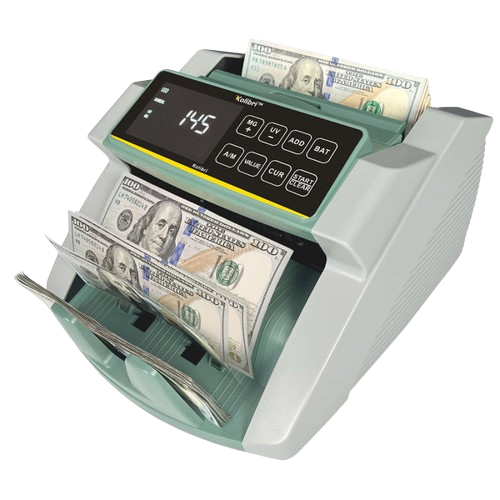
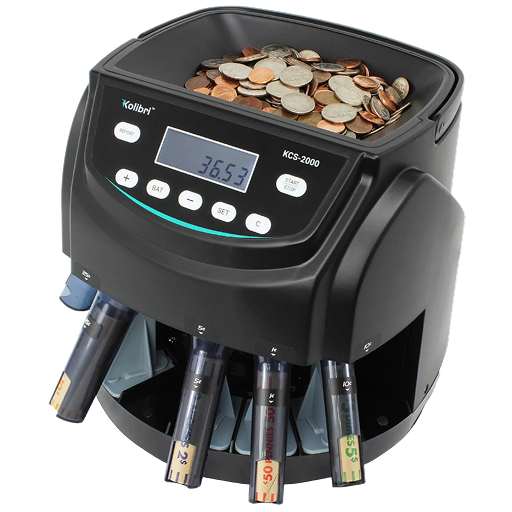
Proper cash handling best practices include using automated equipment for counting and verification. The Kolibri money counter processes 1,400 bills per minute with UV and magnetic counterfeit detection, reducing both errors and reconciliation time. For larger operations that require denomination sorting, the KBR-1500 V2 handles mixed bills with comprehensive detection and organizes currency by type. If you encounter issues with bill counters, refer to our guide on common bill counter problems for troubleshooting.
Loss Prevention and Employee Training
Effective cash management relies on employee understanding and buy-in. Conduct initial training for all staff on your cash handling policies before their first shift. Cover the reasons behind each procedure - employees are more likely to follow rules when they understand the underlying logic.
Provide quarterly refresher training to reinforce procedures and address any emerging issues. New policies or equipment require dedicated training sessions with hands-on practice before live implementation.
Create an open environment where employees feel comfortable reporting concerns or requesting clarification. Employees often know about theft or policy violations before management discovers them - foster relationships that encourage reporting.
Screen job applicants carefully, particularly for positions involving cash handling. Background checks covering criminal history, credit issues, and employment verification help identify lower-risk candidates. Reference checks provide insight into a candidate's reliability in cash handling.
Consistent employee training and education on cash-handling procedures is one of the most effective loss-prevention investments a retailer can make. Stores that implement structured training programs alongside procedural controls typically see meaningful shrinkage reduction within the first year. The investment in training pays significant dividends.
Key Takeaways
- Cash shrinkage from handling errors and theft represents one of retail's largest controllable losses - structured procedures and automation directly address this.
- Establish written policies covering register floats, transaction procedures, counterfeit detection, and daily reconciliation with clear accountability.
- Separate duties across multiple employees to prevent any single person from both stealing and covering up theft.
- Use automated bill counters and counterfeit detectors to speed reconciliation, improve accuracy, and reduce manual counting errors.
- Conduct surprise audits quarterly and track variance patterns to identify problems early and establish deterrents.
- Invest in employee training and create transparent procedures - retailers with structured programs typically see meaningful shrinkage reduction within the first year.
Frequently Asked Questions
What is an acceptable cash shortage in a retail register?
Most retailers accept variances under $1-2 per shift as normal rounding error. Larger discrepancies require investigation. Patterns of consistent shortages by the same employee or at the same register indicate systemic problems that warrant attention.
How often should I conduct cash count audits?
Surprise audits should occur at least quarterly, ideally four times annually. Frequency should increase if variances are common or if you suspect problems. Vary the timing and shift audited to prevent employees from anticipating audits.
What should I do if I find counterfeit currency?
Remove the bill from circulation immediately. In the US, contact the Secret Service to report the finding. Document the date, denomination, and circumstances of discovery. Never attempt to spend counterfeit currency to verify it or cover losses.
How much starting float should each register have?
Most retailers use $300-$500 starting floats, depending on transaction volume and average transaction size. Higher-volume registers may warrant larger floats. Review floats quarterly to ensure they're appropriate for your current business volume.
Can I use video surveillance as my primary cash control method?
Video surveillance is an important component, but should not be your only control. Video documents what happened, but doesn't prevent theft. Combine surveillance with procedural controls, automated equipment, and regular audits for comprehensive protection.
What's the best way to prevent employee collusion on cash theft?
Rotate which employee operates each register regularly. Never pair the same cashier with the same manager consistently. Require a different manager to sign off on daily reconciliations than the one opening the register. Vary audit timing and personnel.
Should I require employees to be bonded?
Employee bonding provides financial protection against theft and is particularly valuable for positions with direct access to cash. Bonding requirements signal to employees that you take cash security seriously and may deter potential theft.
How does a bill counter reduce cash shrinkage?
Bill counters eliminate manual counting errors that cause register discrepancies and prevent accurate reconciliation. Faster, more accurate reconciliation means discrepancies are caught immediately rather than accumulating. Counters with counterfeit detection also prevent the receipt of fakes.
What records should I keep from daily cash reconciliations?
Keep reconciliation reports showing declared balance, physical count, variance amount, and employee acknowledgment for a minimum of one year. Include manager sign-offs and any notes about investigations. These records document controls and can support legal action if theft is discovered.
How can I tell whether a cash-handling problem is an error or theft?
Patterns differentiate error from theft. Random variances suggest counting error or POS mistakes. Consistent shortages from a single employee or register suggest systemic problems. Overages are generally less concerning than shortages but require investigation if patterns emerge.
What's the minimum crew for proper cash handling and separation of duties?
At a minimum, you need one person operating the register, one counting/reconciling, and one manager approving the reconciliation. Ideally, three different people handle opening the register, operating it, and closing/auditing it. Smaller operations may need flexibility, but should minimize overlap where possible.