




Cash Handling Best Practices for Every Business
Cash remains a critical liability for most businesses. Retail shrinkage reached $112 billion in 2022, according to the National Retail Federation, with internal and external theft accounting for roughly two-thirds of total losses. Without proper procedures, your business faces exposure to employee theft, customer fraud, operational errors, and regulatory violations. This guide covers everything from policy creation to technology implementation.
Why Proper Cash Handling Matters
Cash handling directly impacts your bottom line. Poor procedures lead to inventory shrinkage, unexplained discrepancies, and employee losses that compound monthly. Beyond financial impact, weak cash controls expose you to legal liability. If an audit reveals inadequate safeguards, regulators may impose penalties or restrict your operating license. The American Institute of CPAs publishes internal control guidance that treats proper cash handling as a core element of financial security.
Businesses with documented cash handling procedures tend to report fewer discrepancies than those operating informally. The structure alone - knowing procedures exist and are enforced - creates accountability that reduces both errors and theft.
Creating a Cash Handling Policy
Every business needs a written cash handling policy that outlines responsibilities, procedures, and consequences. Your policy should specify who can handle cash, how often counts are conducted, where money is stored, and what documentation is required.
Document each procedure step - from register opening to deposit preparation. Include contingencies for shortages and overages. Address what employees should do if they discover discrepancies or suspect theft. Require all staff to sign acknowledgment forms confirming they've reviewed and understand the policy.
Your policy serves as the foundation for employee training and audit compliance. Update it annually and whenever you implement new equipment or processes.
Cash Register and Drawer Management
Assign individual registers to single employees whenever possible. This creates accountability - each person knows their drawer is their responsibility. At the start of a shift, the incoming employee and their predecessor should count the drawer together, with both parties documenting the amount.
Use a register drop system in which employees deposit cash into a secure location throughout their shift rather than accumulating it in their drawers. This limits the amount of cash visible at any time and reduces temptation. Secure these drop containers so only authorized personnel can access them.
Set consistent drawer limits. If a drawer exceeds your threshold, the employee should immediately deposit the excess. At day's end, have a supervisor independently verify the final drawer count against register records before releasing the employee.
Counting and Reconciliation Procedures
Establish a scheduled reconciliation process - daily is standard, though high-volume businesses may reconcile multiple times daily. Never skip or rush this step. Create a written reconciliation log documenting the date, time, employee, supervisor, counted amount, and expected amount.
Discrepancies should be investigated immediately. Small variances (under $5) may be acceptable with documentation, but patterns warrant employee retraining or disciplinary action. Large discrepancies require investigation and may involve ownership or management.
Use a two-person verification system where two employees count the cash independently and compare results. If the amounts differ, reconcile them to identify the error. Both must sign the reconciliation sheet. This dual-verification approach catches errors and reduces opportunities for fraud.
When depositing daily cash, prepare a deposit slip listing bills by denomination and coin amounts. Have a manager verify the deposit slip against the actual cash before sending it to the bank.
Counterfeit Detection Methods

Counterfeit bills are a direct loss - if you accept a fake $100, that money is gone. The question is where and when detection happens, because it needs to be practical.
At the register, expecting cashiers or servers to inspect every bill thoroughly is unrealistic during busy periods. What works: train staff to do a quick feel-and-glance on $50 and $100 bills. Real currency has raised printing and a distinct paper texture. If something feels wrong, set it aside for the manager. That's the extent of what front-line staff can reasonably do during transactions.
Skip counterfeit pens entirely. As covered in our guide on counterfeit pen reliability, they only detect the most amateur fakes and miss sophisticated counterfeits like bleached bills. The Federal Reserve does not recommend them.
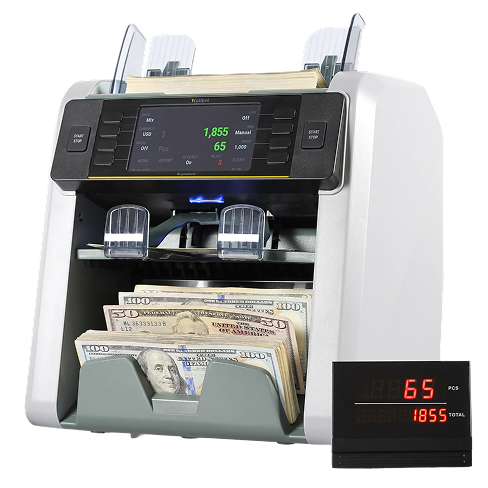
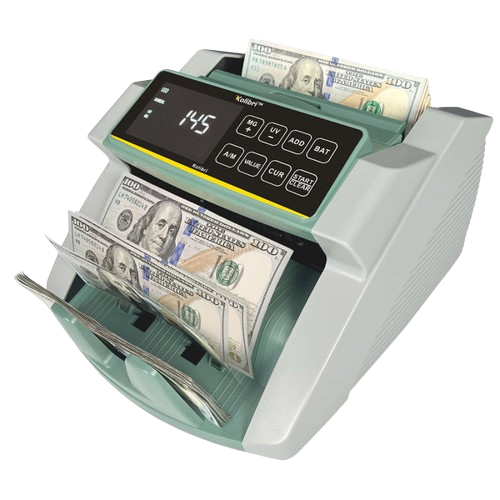
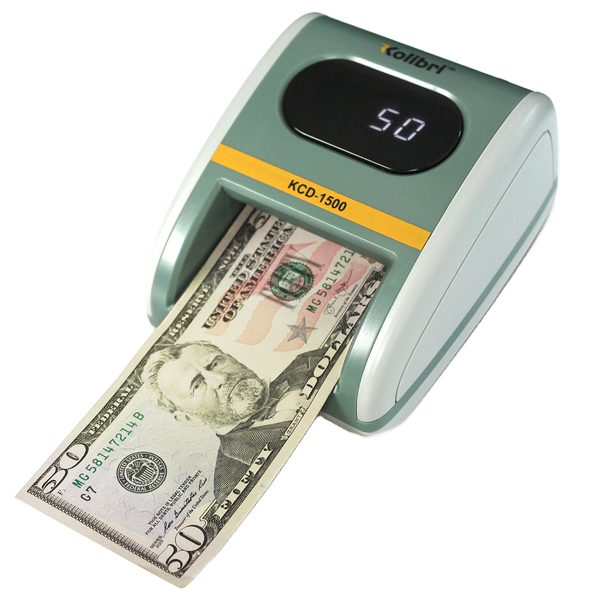
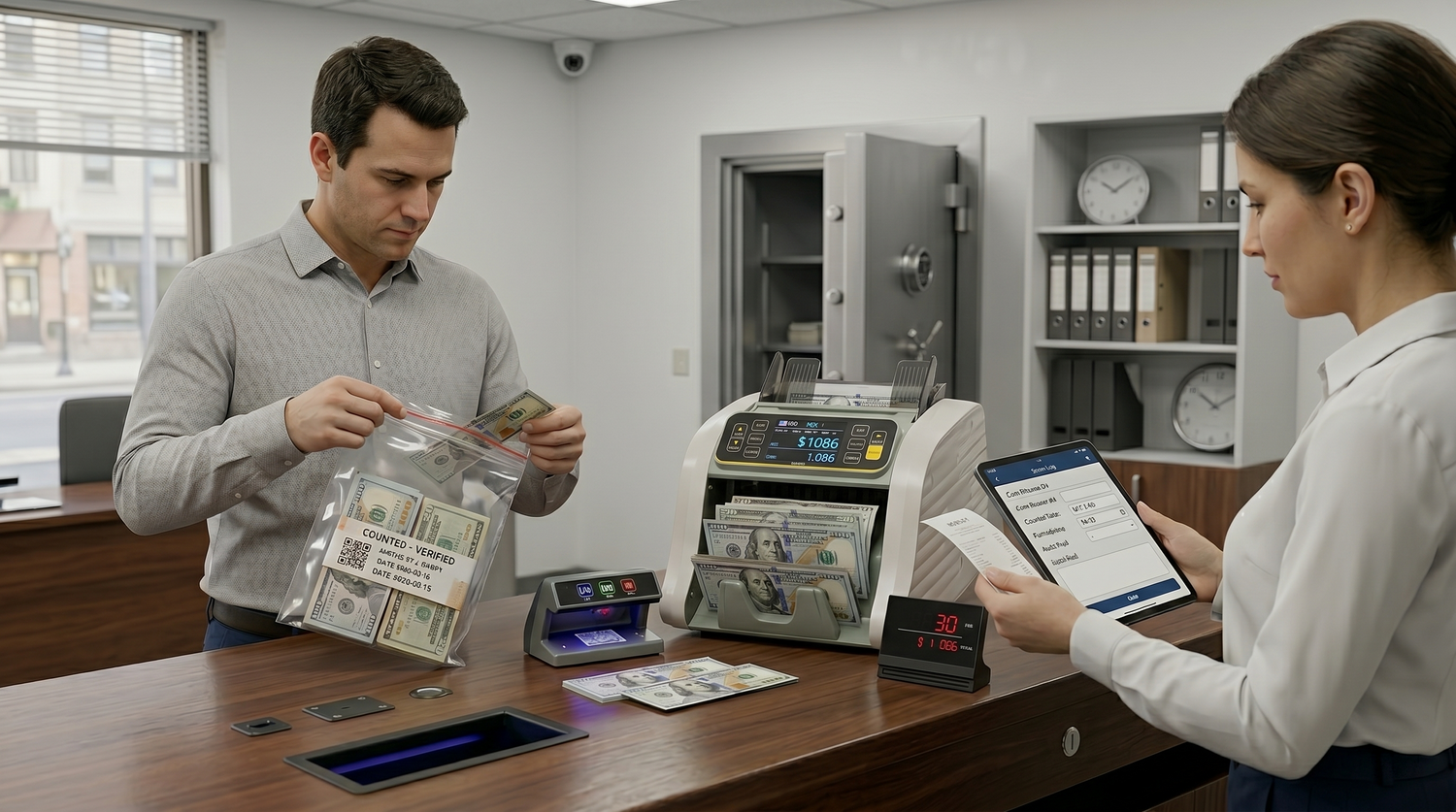
The real screening happens during counting and reconciliation. Electronic counterfeit detectors placed at your counting station catch fakes before they reach your deposit. The KCD-2000 uses 10 detection methods and displays results on screen - it takes seconds per bill and eliminates human error. Bill counters with built-in detection, like the Kolibri or KBR-500, verify bills as they count, combining two steps into one.
Safe Storage and Deposit Protocols
Never keep large amounts of cash in a standard register or desk drawer overnight. Invest in a commercial-grade safe rated for your expected cash balance. A burglary-rated safe provides insurance underwriting benefits and actual theft protection.
Position your safe where it's visible to management but out of customers' view. Limit access to the safe combination - never post it or write it down where staff can find it. Change combinations annually and whenever an employee with access leaves.
Establish deposit schedules. Daily deposits are ideal for most businesses, but high-volume operations may deposit multiple times. Never deposit cash on the same day or time consistently - vary your schedule to prevent predictability that attracts criminals.
For off-hours deposits, use a bank night depository or armored carrier service. These options cost less than many realize and transfer liability to the service provider. Document the deposit time and the armored car receipt.
Dual Custody and Separation of Duties
Prevent individual employees from controlling the entire cash process. No single person should open the register, make sales, reconcile counts, and deposit funds. Split these duties across multiple employees.
A basic separation of duties structure looks like this: Employee A operates the register, Employee B performs the reconciliation count, Manager C verifies the deposit preparation, and Owner/Finance handles the bank reconciliation. This creates checkpoints where errors or fraud become visible.
Implement dual custody for safe access - require two people present when opening the safe. This applies particularly to large withdrawals or the final deposit. While it creates operational overhead, the theft deterrent is worth it.
Rotate assigned duties quarterly so employees don't become too comfortable in single roles. Rotation helps you identify process gaps and cross-train staff to ensure continuity.
Employee Training Programs
New hires should complete cash handling training before handling money independently. Use your written policy as the training document. Demonstrate the correct procedures, have employees practice, then observe them performing the task.
Cover these specific topics during initial training: register operation, drawer counts, reconciliation procedures, counterfeit detection, safe storage, and how to handle discrepancies. Emphasize that cash handling is a privilege and that mishandling has consequences.
Annual refresher training keeps procedures top of mind and catches bad habits before they become widespread. Review any policy changes, introduce new equipment or processes, and address common mistakes from the past year.
Document all training. Keep records showing which employees completed training, when they completed it, and who delivered it. This documentation protects you if issues arise later.
Cash Handling Technology and Equipment

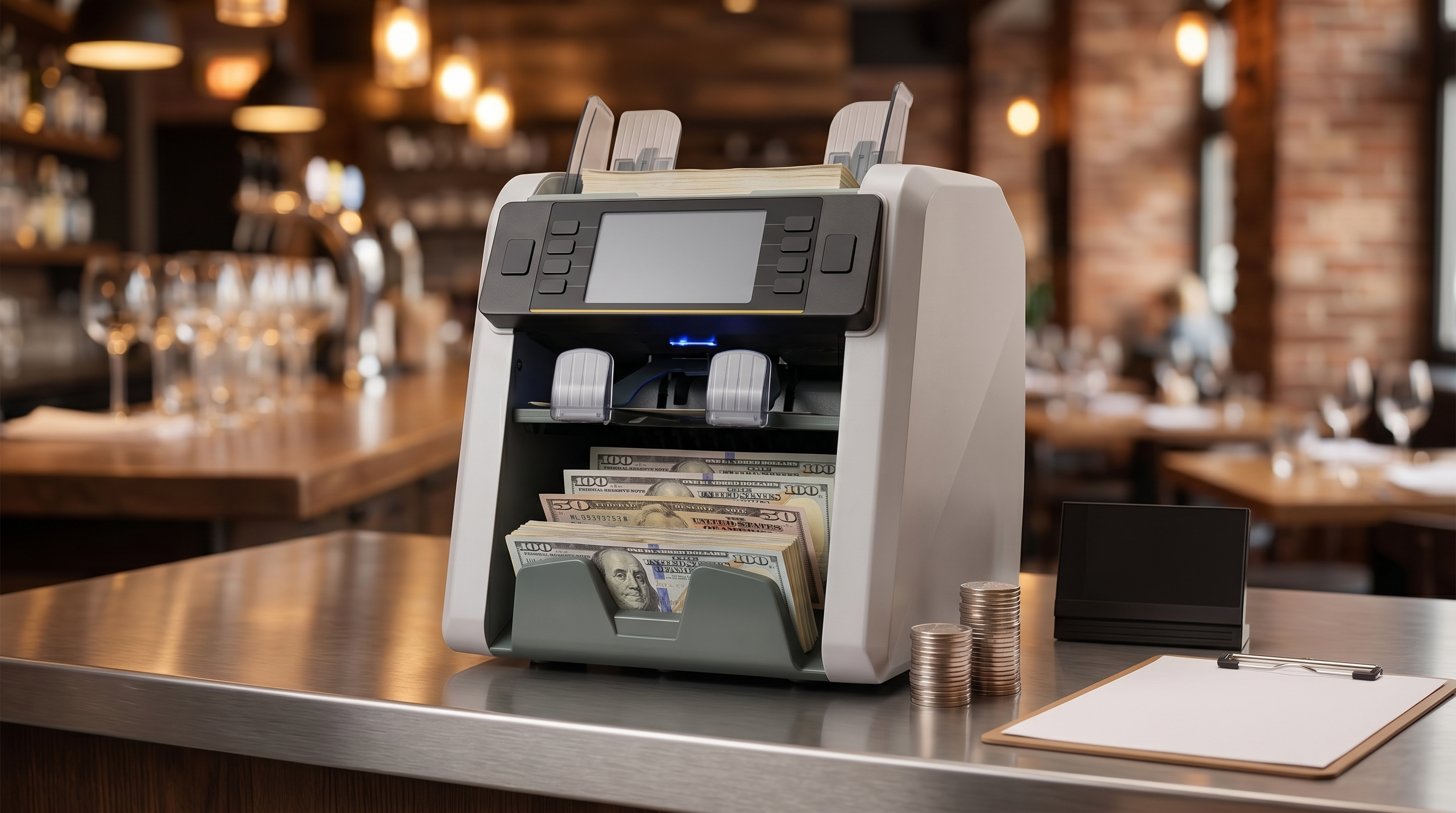
Modern cash handling equipment reduces errors and speeds up workflows. A bill counter like the Kolibri speeds up counting while detecting counterfeits through UV and magnetic scanning. What takes an employee 10 minutes by hand takes 30 seconds with a machine.
For businesses handling mixed denominations, a mixed bill counter like the KBR-500 automatically sorts and counts bills by denomination. This eliminates the time-consuming process of hand-sorting and dramatically reduces counting errors. The dual-custody feature on advanced models builds in accountability.
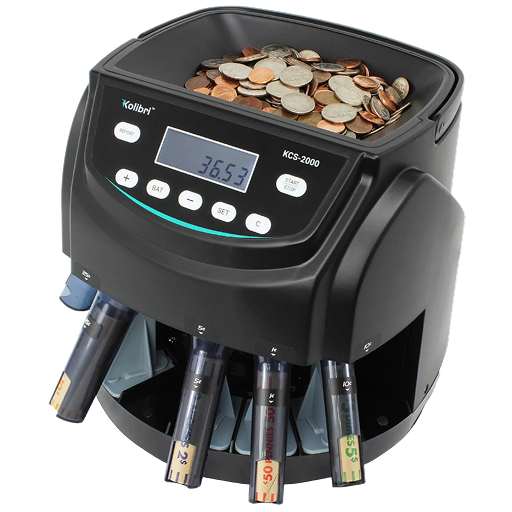
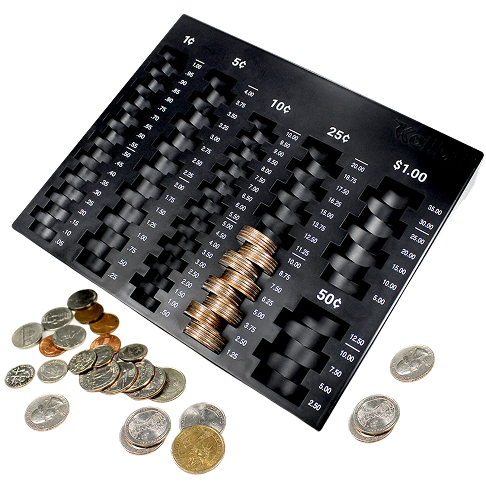
Coin counting machines handle another time sink - coin counting. The KCS-2000 counts and wraps coins automatically, reducing labor by hours each week for businesses with high coin volume.
After counting, compare your totals against register records to catch discrepancies before they compound.
The return on investment is often measured in months rather than years when you factor in labor savings, reduced errors, and shrinkage prevention.
Industry-Specific Considerations
Restaurants and Food Service
Restaurants face unique cash challenges - high transaction volume, tipped employees, multiple payment methods, and late-night deposits. Implement restaurant-specific cash-handling practices, including separate tip jars, daily shift-by-shift reconciliation, and manager sign-offs before each deposit.
Retail Stores
Retail requires constant vigilance because cash-handling at the point of sale presents a risk of theft. Follow retail cash management procedures with dedicated drawer assignments, frequent deposits, and daily audits. Implement POS integration to catch register discrepancies in real time.
Laundromats and Vending
Laundromats and vending operations rely entirely on cash. These businesses need standardized counting procedures and secure storage. Review our guide on cash counters for laundromats for equipment recommendations specific to high-coin environments.
Banks and Credit Unions
Financial institutions face the strictest regulatory requirements. Banking-specific standards are covered in our cash counter guide for banks, which details compliance requirements and equipment standards.
Casinos and Hospitality
Gaming environments require specialized procedures detailed in our casino cash-handling guide, including surveillance integration, chip tracking, and regulatory compliance.
Audit and Compliance Frameworks
Regular audits confirm your procedures are followed consistently. Schedule monthly surprise audits where you independently verify a register count, recount a deposit, or review reconciliation logs. Document all audit findings.
Most businesses operate under state and local regulations governing cash handling. Some industries (banking, gaming) face federal requirements. The Federal Deposit Insurance Corporation (FDIC) provides compliance guidance for financial institutions. Understand the applicable regulations and ensure your procedures comply with them.
Develop an audit checklist covering: proper separation of duties, timely reconciliation, deposit documentation, employee training records, safe maintenance, and cash flow accuracy. Use this checklist quarterly.
If you identify violations during audits, address them immediately. Poor compliance creates liability exposure far exceeding the cost of correction.
Loss Prevention Strategies
Beyond procedures, implement environmental controls. Ensure your register area is visible to management. Position cash handling in a location without blind spots. Good lighting and clear sightlines deter internal theft.
Install security cameras covering registers, safes, and deposit areas. Ensure footage retention meets your insurance requirements (typically 30-90 days). The camera's deterrent effect alone reduces incidents.
Implement a cash accountability system where variances trigger an investigation. When a register shows a shortage, investigate whether it's operator error, fraud, or system issues. Pattern analysis reveals which employees or shifts have problems.
Educate customers about security, too. If you're verifying bills and using counterfeit detection, customers are less likely to attempt to pass counterfeit currency. This public process is actually a loss prevention tool.
For specialized guidance on specific issues, read our article on common bill counter problems, which addresses troubleshooting and maintenance.
Cash Flow Management
Proper cash handling connects directly to cash flow management. Predictable, accurate reconciliation means you always know your actual cash position. This clarity enables better inventory purchasing, payroll timing, and capital planning. When your daily procedures are consistent and documented, you can forecast cash needs with confidence and avoid operational disruptions caused by unexplained discrepancies.
Good cash handling practices form the foundation for strong cash flow management and financial control. Integrating these procedures into your broader financial operations ensures that cash – your most liquid asset – remains secure and your financial picture stays clear.
Key Takeaways
- Implement a written cash handling policy requiring employee sign-off and annual refresh.
- Use two-person verification for all cash counts and implement separation of duties.
- Invest in counterfeit detection equipment appropriate to your transaction volume and fraud risk.
- Schedule daily deposits and use night depository or armored carrier services for after-hours deposits.
- Train all cash-handling staff annually and maintain documentation of completion.
- Conduct monthly surprise audits to verify procedures are followed consistently.
- Deploy surveillance cameras and ensure registers remain visible to management.
- Consider cash-handling equipment, such as bill counters, to reduce errors and improve speed.
- Establish accountability through individual register assignment and reconciliation logs.
- Document all discrepancies, investigate patterns, and address violations immediately.
Frequently Asked Questions
How often should I reconcile cash?
Daily reconciliation is the standard for most businesses. High-volume operations (restaurants, retail) may reconcile by shift or multiple times daily. The goal is to identify discrepancies while the responsible employee is still on duty.
What's the difference between cash counting machines and counterfeit detectors?
Bill counters verify quantity and sometimes detect counterfeits using UV/magnetic scanning. Counterfeit detectors specialize in authentication using multiple methods (UV, IR, magnetic, and size verification). Many businesses use both counters for volume and speed, and detectors for accuracy on problem bills.
Can I use a personal safe instead of a commercial safe?
Avoid personal safes for business use. Commercial safes are rated for burglary and fire, provide better insurance coverage, and meet regulatory requirements in regulated industries. They're also sized appropriately for business cash volumes.
What should I do if I discover an employee taking cash?
Document the incident thoroughly. Secure any surveillance footage. Involve your manager and ownership immediately. Consult with HR and legal counsel before taking action. Preserve evidence and follow your disciplinary policy consistently.
How do I handle cash if I'm operating 24/7?
Implement multiple deposits throughout the day and use night depository services or armored carriers for off-hours deposits. Limit the amount in the safe at any time. Ensure continuous surveillance and maintain strict access controls.
Are counterfeit pens reliable for detecting fake bills?
No. Counterfeit pens are unreliable and should not be part of your detection strategy. They produce false positives, fail to detect sophisticated fakes such as bleached bills, and catch only amateur counterfeits. The Federal Reserve does not recommend them. Use electronic counterfeit detectors at your counting station instead - they employ multiple authentication methods and eliminate human error.
What's the best way to train new employees on cash handling?
Provide written procedures, demonstrate the correct process, have employees practice under supervision, then observe independent performance before allowing unsupervised handling. Document training completion and require annual refresher training.
How do I establish separation of duties with a small team?
Rotate responsibilities so no single person controls the entire cash process. At minimum: someone operates the register (not the owner), someone else does the count, and the owner/manager does verification. Even a small rotation prevents concentrated risk.
What happens if my daily reconciliation doesn't match my register?
Investigate immediately. Check for data entry errors in your POS, recount the physical cash to verify accuracy, and review transactions during the shift. If still unresolved, interview the employee responsible for the operations about suspicious transactions. Document all findings.
Should I use a bank night depository or an armored carrier?
Both options transfer liability to the service provider. Choose based on cost, convenience, and your insurance requirements. Daily deposits (regardless of method) are worth the investment to minimize risk.
How often should I update my cash handling policy?
Review and update annually at a minimum. Update whenever you implement new equipment, change procedures, add staff responsibilities, or identify gaps during audits. Employee feedback often reveals practical improvements.