



Counterfeit-detection pens cost businesses real money due to missed fraud. A $5 pen that only catches amateur fakes gives a false sense of security while sophisticated counterfeits slip through. The Federal Reserve does not recommend them. What actually works for protecting your cash operations - and why electronic detection pays for itself.
How Counterfeit Pens Actually Work
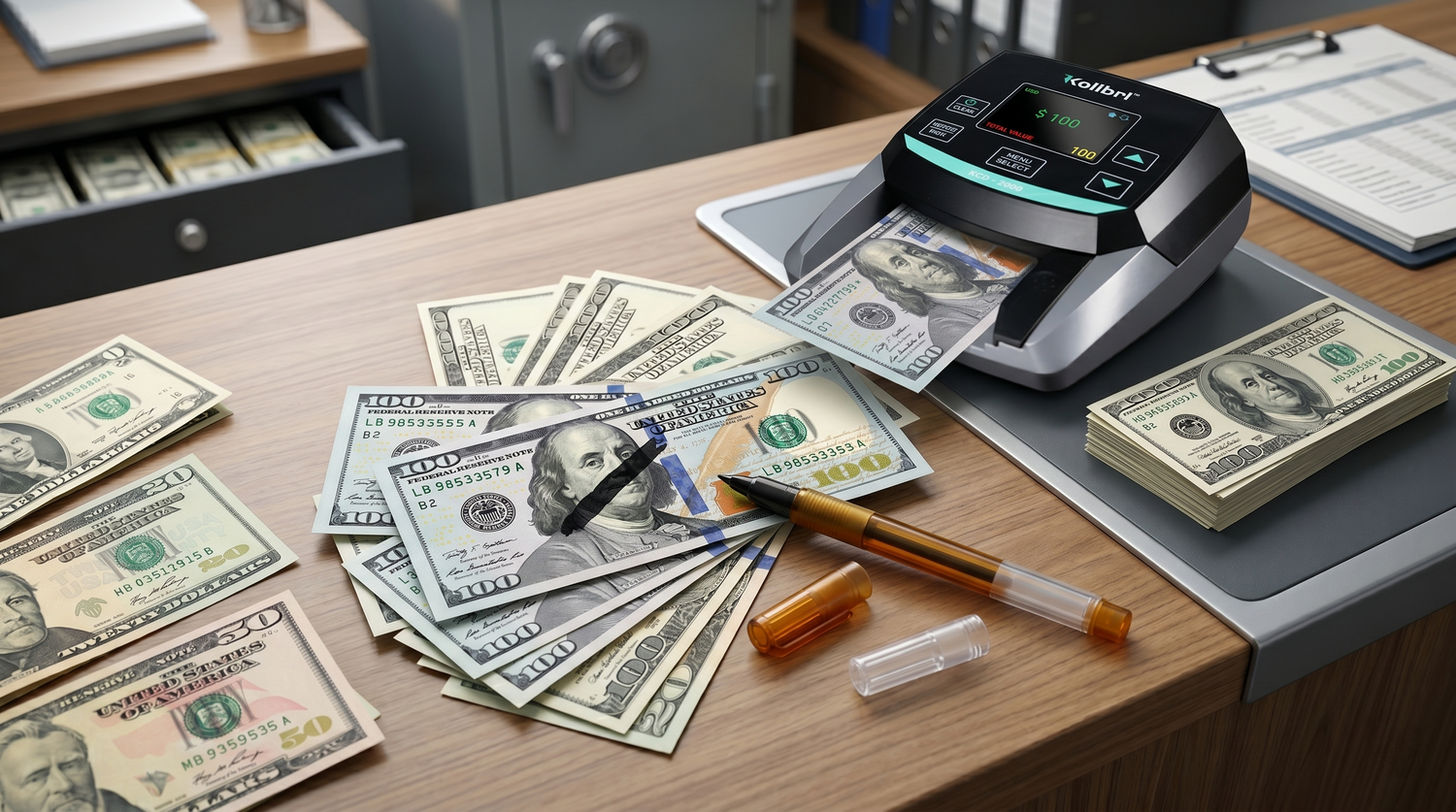
Counterfeit detection pens use iodine-based ink that reacts to starch found in wood-based paper. When you mark genuine U.S. currency, the ink stays clear or amber because real bills are printed on cotton and linen blend paper, which contains no starch. The iodine does not react, so the mark remains colorless.
When you mark a counterfeit bill printed on regular paper, the ink turns dark brown or black because wood pulp contains starch. This chemical reaction is the entire detection mechanism. For amateur counterfeiters printing bills on home printers with standard paper, this method works - but sophisticated criminals operate on a completely different level.
Why Counterfeit Pens Fail Against Real Threats
The fundamental problem is that counterfeit pens only catch the lowest-skill counterfeiting attempts. Professional counterfeiters use several proven methods that render detection pens completely useless.
Bleached bills represent the most common sophisticated counterfeiting technique. Counterfeiters obtain genuine $1 or $5 bills, chemically bleach away the ink, then reprint them as $50 or $100 bills using high-quality printing equipment. The paper is genuine. The security features often remain partially intact or are skillfully replicated. A counterfeit pen test produces a clear mark - exactly what you would see on legitimate currency. The bill passes the pen test, but is still fraudulent.
Washed currency involves similar chemistry. Old or worn bills that have undergone bleaching are ambiguous because the original starch content has been altered. Even genuine currency in poor condition sometimes fails pen tests. In a widely reported 2016 case, an eighth-grader at a Texas middle school tried to pay for lunch with a genuine $2 bill from 1953 that her grandmother had given her. The school's counterfeit pen could not verify it, and police were called to investigate before confirming the bill was real.
The core issue is that counterfeit pens test for starch content rather than security features. They confirm the paper's composition, not its authenticity. A single-point test cannot replace comprehensive verification.
What the Federal Reserve Actually Recommends
The Federal Reserve has stated that counterfeit detection pens "are not always accurate and may give you false results." Federal guidance on counterfeit currency recommends checking specific security features built into modern currency:
- Watermarks. Hold the bill to the light and look for an image that matches the portrait. The watermark is embedded in the paper itself and cannot be printed onto regular paper or easily replicated on bleached bills.
- Security threads. Real bills contain an embedded metallic security thread running vertically. The thread is woven into the paper during manufacturing, not printed on the surface. Thread position varies by denomination.
- Color-shifting ink. On $10, $20, $50, and $100 bills, the numeral in the lower right corner shifts from copper to green when tilted. This reflective property requires specialized inks and printing techniques that go beyond those used in most counterfeiting operations.
- Microprinting. Fine text appears in multiple locations on genuine bills but is too small to reproduce clearly on counterfeit equipment. When magnified, real microprinting remains sharp while counterfeit attempts blur or distort.
These security features address the actual threat of sophisticated counterfeiting, not the starch-testing limitation of detection pens.
Electronic Detection Methods That Actually Work
Modern counterfeit detection technology moves far beyond chemical reactions to starch. Electronic detectors use multiple sensors that work on different principles, creating redundancy against various counterfeiting techniques.
Ultraviolet (UV) detection identifies features invisible to the naked eye. Genuine U.S. currency contains security inks and fibers that fluoresce under UV light. Counterfeiters struggle to match this fluorescent property without access to specialized materials and manufacturing equipment. UV detection detects bleached and reprinted bills because the security inks cannot be perfectly replicated during reprinting.
Magnetic ink detection identifies the metallic properties of currency inks. Real bills use specially formulated inks containing magnetic particles. When a bill passes through a magnetic field, the detector measures the magnetic signature. Counterfeit bills produced with standard commercial inks lack this magnetic property, triggering detection. This method is highly effective against both amateur and moderately sophisticated counterfeits.
Infrared (IR) detection uses light wavelengths beyond human vision to identify security features and printing characteristics. IR sensors detect variations in ink composition and paper treatment that are invisible under normal light. Professional counterfeiters must account for UV, magnetic, and infrared properties - significantly raising the barrier to successful counterfeiting.
Size and thickness detection measures physical dimensions. Genuine currency has precise specifications. Counterfeit bills printed on the wrong paper stock or using improper sizing fail dimension checks. This provides an additional layer of verification when combined with other detection methods.
Comparison: Detection Methods Side-by-Side
|
Detection Method |
Cost |
False Positives |
Catches Bleached Bills |
Speed |
Best For |
|
Counterfeit Pens |
$3-10 |
High (worn bills fail) |
No |
Instant |
Training only |
|
UV Detection |
$40-60 |
Low |
Yes |
<3 seconds |
Small businesses |
|
Multi-Poin Electronic |
$85-145 |
Very Low |
Yes |
<2 seconds |
Moderate-volume operations |
|
UV+Magnetic + IR |
$87-145 |
Very Low |
Yes |
<1 second |
Retail, restaurants, casinos |
The cost difference is minimal, yet the reliability difference is substantial. A $99 electronic detector catches fraud that a $5 pen misses, making it a practical decision for any business handling cash.
What to Do If You Receive Counterfeit Currency
If you identify counterfeit bills, do not spend them, handle them further than necessary, or attempt to return them to a retailer. Counterfeiting is a federal crime - merely possessing counterfeit currency with the intent to spend it violates the law. However, innocent possession is not illegal.
Contact your local police department and provide them with the bills. Police can determine whether the currency is counterfeit and, if appropriate, file reports with the Secret Service. Document the source of the bills if possible. The Secret Service investigates major counterfeiting operations, and your report contributes to broader investigations.
Implement verification procedures at the point of sale. Train employees to check security features on high-denomination bills. Use electronic detection equipment for large transactions or high-risk situations. Establish a protocol where employees immediately separate any suspicious bills and report them to management.
Choosing the Right Counterfeit Detector for Your Business
Selecting appropriate detection equipment depends on your transaction volume, the bill denominations you handle, and your risk tolerance. Most businesses benefit from electronic detection systems that work faster and more reliably than manual checking.
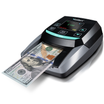
For small retail operations with moderate cash handling, the Kolibri KCD-1000 provides UV, magnetic, infrared, size, and double-note detection in a compact 4-way bill insertion system. Verification completes in less than 2 seconds, and the device identifies double notes that might be paid out in error. At $90.90, this covers essential detection needs for businesses getting started with electronic verification.

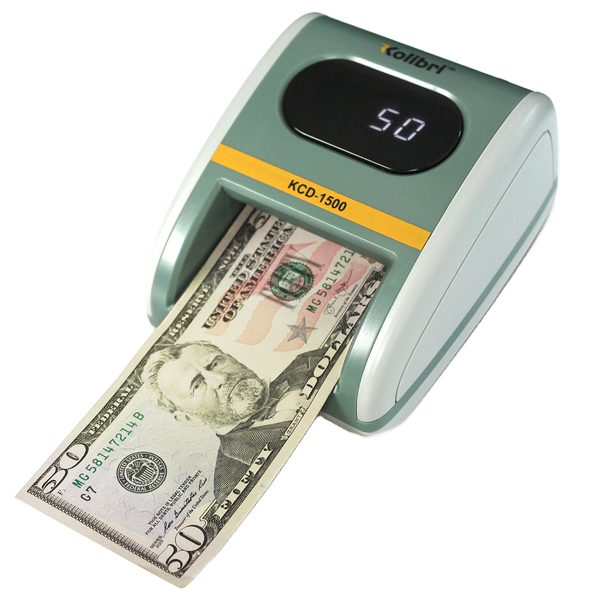
For restaurants and retail with higher transaction volumes, the KCD-1500 adds color, watermark, and denomination display on an LCD screen. The 0.5-second verification speed accommodates busy operations, and showing denomination prevents short-changing errors. This $97.45 investment provides both fraud prevention and operational efficiency.

Businesses requiring maximum detection capability should consider the KCD-2000, which offers 10 detection methods, including UV, magnetic, infrared, size, color, and watermark verification. The TFT display shows the denomination and generates counting reports. At $141.99, this detector meets the verification needs of casinos, banks, and large retail chains.

The Kolibri Bishop offers a compact alternative combining UV, magnetic, and infrared detection in a portable 6.3" x 5.7" x 2.7" unit. The LCD automatically shows the denomination, and the device includes a 1-year warranty.

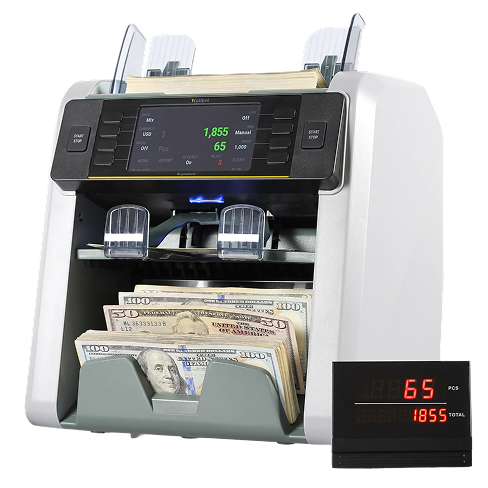
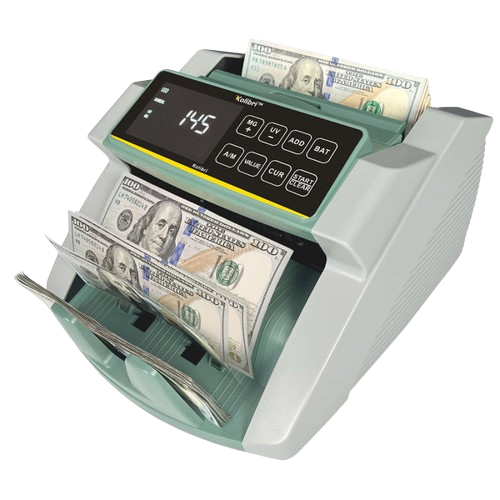
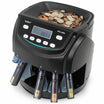
For operations that count bills regularly, bill counters with built-in detection provide efficiency gains. The Kolibri money counter counts 1,500 bills per minute with UV and magnetic detection for $96.99. The KBR-500 adds infrared detection and counts 1,200 bills per minute at $286.95.

Implementing Detection Within Your Workflow
Electronic detectors work best when integrated into cash handling procedures. Train staff to run every bill of $50 or more through the device before accepting it. For high-risk transactions or large cash payments, verify all bills regardless of denomination. Establish a protocol in which any bill that fails detection is immediately isolated and reported to management.
Pair electronic detection with manual checks of security features. Employees should know how to identify watermarks, security threads, and color-shifting ink without relying solely on equipment. This creates redundancy - if the detector malfunctions, staff can still perform basic verification.
Regular maintenance ensures detector reliability. Clean sensors weekly according to manufacturer instructions, replace worn components, and update detection parameters if new currency security features are released. A properly maintained detector will operate reliably for years. For troubleshooting tips, see our guide on common bill counter problems.
Consider counterfeit detection as part of broader cash handling best practices. Implement other security measures, including security cameras, limited access to cash areas, and regular reconciliation procedures. Detection equipment protects against external fraud, but internal controls prevent employee theft and accounting errors.
Key Takeaways
- Counterfeit detection pens only detect starch in paper and fail against sophisticated counterfeiting techniques, such as bleached bills.
- The Federal Reserve has stated that detection pens "are not always accurate" and recommends checking security features (watermarks, security threads, color-shifting ink) instead.
- Electronic detectors using UV, magnetic, and infrared technology catch fraud that pens miss.
- Bleached bills pass pen tests, but are still counterfeit - professional counterfeiters bypass single-point detection.
- Electronic detection equipment costs $87-$145 and offers significantly greater reliability than $5 pens.
- Implement detection procedures as part of comprehensive cash handling best practices.
- Train staff on manual security feature checks and regularly maintain detection equipment.
- Report counterfeit bills to local police and the Secret Service rather than attempting to spend or return them.
Frequently Asked Questions
How does a counterfeit detection pen work?
Counterfeit pens contain iodine-based ink that reacts to starch in wood-based paper. The ink stays clear on real currency printed on cotton-linen blend paper, but turns dark on regular paper containing starch. This single-point test only catches the most basic counterfeits printed on home printers.
Can detection pens catch bleached bills?
No. Bleached bills are genuine currency printed with counterfeit ink, so they still contain the cotton-linen paper that causes pens to test as legitimate. Bleached bills often pass pen tests perfectly while being completely fraudulent. Electronic detectors catch bleached bills because the reprinting process leaves traces detectable by UV and magnetic sensors.
Does the Federal Reserve recommend counterfeit pens?
The Federal Reserve does not recommend counterfeit detection pens as a verification method. Federal officials recommend checking security features, including watermarks, embedded security threads, color-shifting ink, and microprinting instead.
What's the difference between UV and magnetic detection?
UV detection identifies special inks and fibers that fluoresce under ultraviolet light. Magnetic detection measures metallic properties in genuine currency inks. Combined, they provide redundancy - if one method is somehow bypassed, the other catches fraud. Multi-point detection systems use both methods.
Why did my genuine bill fail a counterfeit pen test?
Old or heavily circulated bills sometimes fail pen tests because the paper condition has changed over time. Wear, exposure to water or chemicals, and age can affect starch content in the cotton-linen blend, triggering the iodine reaction. A genuine 1953 $2 bill famously failed pen tests at retail locations.
How long does electronic detection take?
Multi-point electronic detectors verify bills in 0.5 to 2 seconds, depending on the model. This speed makes electronic detection practical for busy retail operations, restaurants, and casinos where staff check dozens of bills per shift.
What should I do if I receive a counterfeit bill?
Do not spend it or return it to a retailer. Contact your local police department with the bill, and the police will contact the Secret Service if appropriate. Document the source of the bill if possible. Innocent possession of counterfeit currency is legal, but spending counterfeit bills is a federal crime.
How much does quality counterfeit detection equipment cost?
Electronic detectors range from $85 to $140 for reliable multi-point systems. For most businesses, this is a minimal investment compared to the risk of accepting even one sophisticated counterfeit. The price difference between a detection pen and an electronic detector is less than $100, yet the reliability difference is substantial.
Can I use just UV detection, or do I need multiple detection methods?
While single-method systems like UV-only detection work better than pens, multi-point detection (UV, magnetic, infrared) provides stronger protection. Counterfeiters sometimes focus on defeating specific detection methods. Using three independent detection principles creates redundancy - if one is bypassed, the others catch fraud.
What's the difference between a counterfeit detector and a bill counter with detection?
Counterfeit detectors verify individual bills through a verification port. Bill counters with built-in detection verify bills as they count, combining two functions into one device. Bill counters with detection are ideal for high-volume operations that regularly count money.
How do I know which counterfeit detector to choose for my business?
Consider your transaction volume, bill denominations, and required verification speed. Small retailers benefit from compact detectors like the KCD-1000 or Bishop. Busy restaurants and high-volume retailers prefer faster multi-method systems like the KCD-1500. Large operations handling high-denomination bills should invest in the KCD-2000 with full detection capability.